Why rest isn't restoring you
Stopping work isn't the same as recovering from it. Most evenings swap one demand for another. A body can end a restful evening with less in the tank than it started with.
Published
Updated
11 minute read
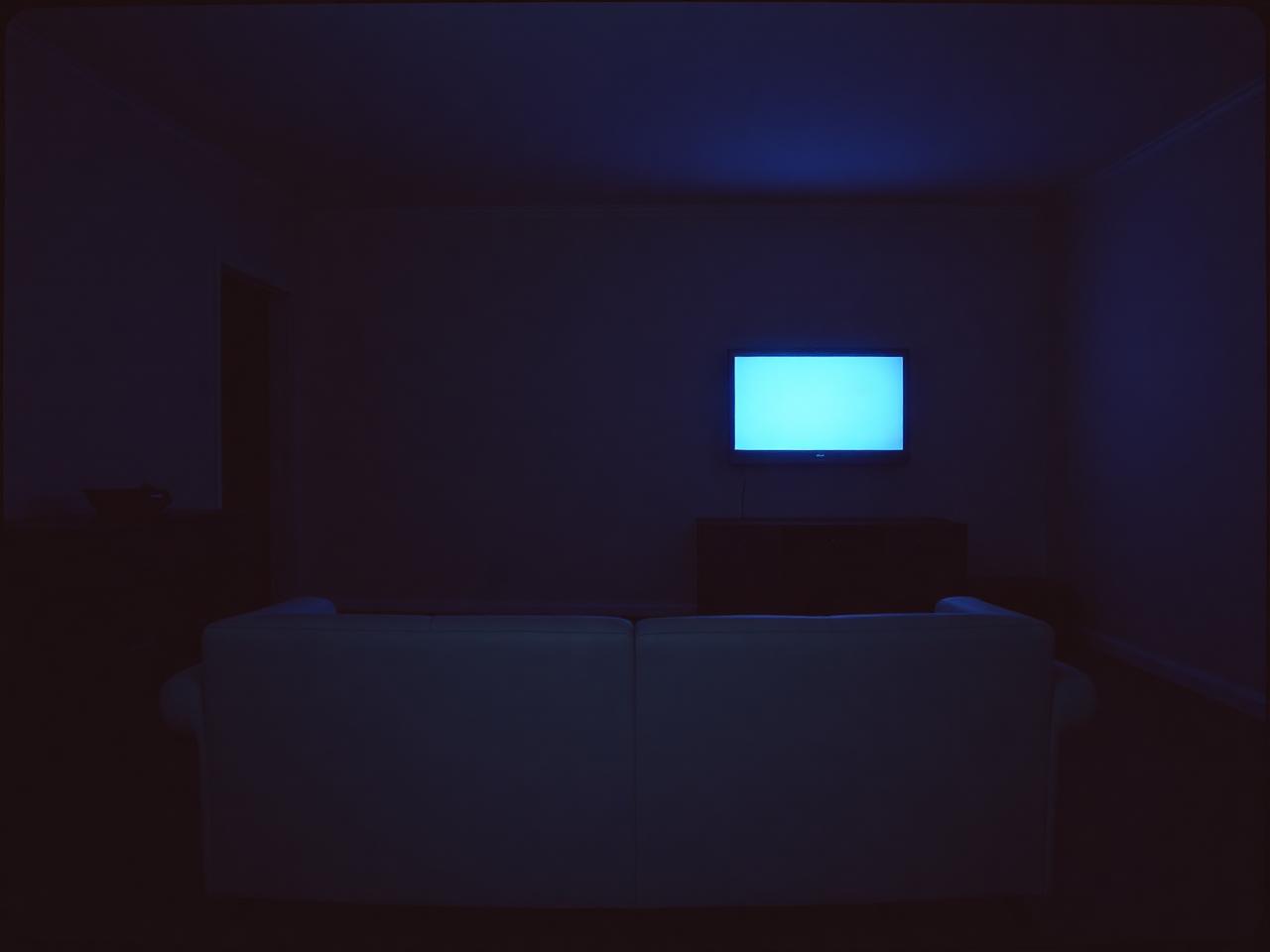
In a sleep lab, twelve adults spent the four hours before bed reading. Not working, not arguing, not at the gym. Just reading, about as restful as an evening gets. On some nights they read a printed book, on others the same words on a bright tablet. After the tablet nights they took longer to fall asleep, their melatonin came later and in smaller amounts, and they got less REM sleep. They were also less alert the next morning.1
Twelve people is a tiny sample, and the study tested light, not content. Hold the result loosely. But it points past blue light: an evening can pass every test for rest and still leave the body worse off.
The interesting part has little to do with screens. Underneath sits a sorting error that runs through most of what we say about rest.
The error is to treat rest as taking something away. Remove the demand and repair is supposed to begin on its own, the way a room cools when the heater goes off. But recovery is a set of jobs the body has to start, fund and let finish. They've entry conditions a normal evening often fails to meet, and stopping only clears the way.
The argument here's one a fair-minded reader could dispute. Most of what we call rest isn't recovery but a different kind of load. The evening on the sofa rarely removes demand; it swaps one demand for another, usually more broken up and harder to finish. Because the swap feels good, a person can end the evening with less in the tank while sincerely reporting that they relaxed.
Three things we call by one name
The word rest is asked to cover at least three states, and mixing them up is most of the problem.
The first is stopping. You've quit the hard thing and the laptop is shut. That's a change in what you're doing, nothing more. A body can stay switched on long after the thing that switched it on has gone.
Bruce McEwen gave a name to the running cost of adapting: allostatic load. Every time your body meets a demand it pays a small price. The prices add up, and you usually can't feel them adding up. One way that bill grows is a stress response that won't shut off once the stressor has passed.2 So stopping is one event, the body standing down is another, and the two aren't reliably close in time.
The second is downtime that goes looking for input. You stopped, then filled the gap: feed, stream, group chat, a second screen beside the first. This is what most evenings are. It beats working and it's often fun, and it's still a demand whose cost is merely lower to the touch.
The third is recovery itself, the inside work of mending, clearing, settling and filing away. Only this one gives capacity back. The first opens the door to it; the second can stand in for years.
Recovery is work, and work has to be funded
Stopping doesn't produce recovery because recovery costs something to run.
Sleep is the clearest case, because that's where repair is easiest to see. Sleep isn't idling. It's active work with real effects on the immune system, on inflammation, and on how the body handles fuel.3 Disturb someone's sleep and those signals shift, which no amount of lying still would do.
In mice, sleep opens the space between brain cells, and waste gets cleared out of the tissue much faster.4
Now widen it. Mending tissue, retuning the immune system, digesting a meal, letting an over-recruited nervous system stand down. All of it draws on the same limited budget, and a body that senses demand still coming funds the demand first. Thinking and moving get protected, because they're how animals deal with threats. Repair gets pushed back, because it can wait and nothing about the delay shows up right away.
That leaves nasty arithmetic. The emptier a system is, the worse it runs the process that would fill it back up. Recovery isn't a fallback that kicks in once everything else has failed. It's one of the first things dropped, exactly when it's needed most. Which means "you just need more rest" can be true advice given to someone with no way to use it.
Wanting isn't the same as liking
What makes the scrolled evening strange is how reliably it fails to satisfy while staying so hard to stop.
Reward research offers a clean answer: two things everyday speech treats as one are separate in the brain. There's wanting, which drives you to chase a thing, and liking, which registers the pleasure once you have it. Change the dopamine signal in an animal and you change how hard it works for a treat, but not how much it enjoys it.5 Dopamine is closer to the currency of drive than of pleasure, marking things as worth going after.6 That's the machinery a concentrated reward gets its hooks into.
An endless feed is close to a pure wanting machine. It hands you small, unpredictable signals with no natural stopping point and almost no effort involved. What it hands you very little of is the settled, full feeling of a want that has been met.
This argument was made most famously about food. Take a natural reward, strip out the fibre, the water and the work, then concentrate the signal and remove the built-in brake. The animal will keep going long past the point where anything is being gained.7 The argument reaches past food, but hold it as a reach rather than a proof. Nobody ran the reward experiments on social feeds.
The machinery that keeps pulling you back to the feed isn't the machinery that would have been satisfied by it.
A want that never closes is a loop that never closes. The system stays in chase mode, and chasing isn't a resting posture.
The cost is the switching, not the minutes
The second reason the swapped evening fails is structural, not chemical, and easy to miss because it doesn't feel like effort.
When work gets interrupted, people don't simply take longer. In lab conditions they make the time up, finishing the broken-up task faster than the clean one. But they pay for it in stress, frustration, time pressure and reported effort.8 The break doesn't add minutes so much as change the price of them.
Now look at a normal evening that way. It holds forty or four hundred tiny switches, each arriving with its own mood. A fight in a comment thread. A headline about a disaster far away. Nobody feels this as labour. In shape it's interrupted work with the output taken out.
A much-quoted study found that self-reported heavy media multitaskers filter out irrelevant things less well, and switch tasks less well.9 But it can't tell us which way the arrow points. Maybe doing several things at once wore the filter down, or maybe a weak filter drives people toward it. Both stories fit the data, and the second is at least as likely. A drained system may break up its own focus as readily as broken focus drains it.
Sampled at random moments across daily life, minds were wandering close to half the time. People reported feeling less happy when their focus was elsewhere than when it was on what they were doing, whatever that was.10 An evening spent sitting still with the mind elsewhere passes the visual test for rest and very few of the felt ones.
The part that resists the obvious conclusion
It would be easy to run this into a familiar ending: phones are wrecking us, so put them down. The evidence from large groups doesn't support that, and pretending otherwise would weaken this piece.
The most careful look at the question used three big datasets. It ran the link between teenage wellbeing and screen use through every fair way of doing the sums, not just the flattering one. Screen use accounted for a few tenths of one percent of the spread in wellbeing. The authors compared that to wearing glasses, or eating potatoes.11 Whatever is going on, it isn't a disaster you can see in the average.
Two things follow. First, any argument resting on screens being toxic is in trouble. Second, and more interesting, the displacement argument survives almost untouched: input crowds recovery out of the hours it needed. The large studies were never built to test that; they measure device use, not what the hours would otherwise have held. For one teenager the missing hour is sleep, for another a walk, for another homework. Averaged across a country, a swap effect with wildly different missing pieces is nearly invisible, even when real for many people.
So the claim worth defending is narrower and much harder to brush off. Input doesn't have to harm you to cost you something. It only has to take up the hours in which something else was meant to happen. That something else has no other slot in the day.
Doing nothing is also a demand
Here the argument turns against its own easiest version.
If too much input is a load, the intuitive fix is its opposite: less input, more stillness, an evening of nothing. But the absence of input isn't a neutral state either. A body that's never challenged loses range, and a mind with nothing to chew on narrows. Unused capacity gets quietly withdrawn, because keeping it on hand is expensive and bodies are thrifty. Boredom doesn't restore, and long stretches of doing nothing bank nothing.
A system with nothing to recover from doesn't get to skip the bill. It gets a different one.
This next part is our reading, not a finding, and it should be labelled that way. The evidence that long-term overload carries a cost that adds up is strong.2 The claim that long-term underload carries a comparable cost by another road is an interpretation. We hold it with real confidence, and we can't point to one decisive experiment for it. Wearing out through disuse isn't the same mechanism as straining through overuse. Treating the two as mirror images is a modelling choice rather than a result.
What the split does is sharpen what we mean by recovery. Recovery follows effort: the system takes in something that actually happened. Collapse fills the space when there was no effort to take in. From the outside the two look the same. The difference lies in what came before the stillness and what comes after, which a posture can't show you.
What recovery appears to require
If recovery is active work with entry conditions, it's fair to ask what they look like. The evidence supports a modest sketch rather than a protocol, in three parts.
The first is surroundings the system recognises. Some places seem to restore the kind of focus you have to hold on purpose, apparently by holding your focus without demanding it. Short spells in natural settings improved how people did on focus tasks, where matched city walks didn't.12 A ninety-minute walk in nature lowered self-reported rumination, which means going over the same thought again and again without getting anywhere.13 These are small studies with short-term results, and nobody can be blinded to a walk, so moderate confidence is the right amount.
The second is closing some open loops. An unfinished thing keeps a channel open, and open channels cost something to run. Part of your mind stays stuck on the last task. That's attention residue, and it's what makes the next task expensive.8 Whatever else recovery needs, it seems to need that the system is no longer holding something.
The third is enough left in the tank to run the process, which is the condition that ruins tidy advice. A system spending its budget on staying upright has nothing spare for upkeep.3 That's why the drained person reaches for the fastest fix on hand: a system in deficit takes the cheapest thing on the menu. Reading that as a flaw of character mistakes a maths problem for a moral one.
The instrument problem
All of which leaves an awkward residue.
If recovery could be felt reliably, the swap would fix itself. You'd notice the evening hadn't worked and stop spending evenings that way. But the felt sense of being rested is the exact thing that too much input retunes. And it does the retuning in the same stretch of time you'd use to take a reading. The evening feels fine. It feels, specifically, like relief, and relief borrows most of its credit from being the opposite of what came before.
You can't tell the difference by feel, because feel is the thing being retuned.
There's no blood test for a recovered hour, and nothing tells repair apart from pleasant idling at the scale of one evening. The studies that could settle it haven't been run. So the useful question can't be did I rest enough, at least not day by day. It has to be something slower and less satisfying. Whether capacity is trending up or down across weeks, and whether the same demands still cost what they used to.
Which puts the deciding moment somewhere other than where people look for it. Recovery is meant to happen in the evening, but it needs resources the evening can't supply. So the evening is only where the result shows up. Whatever settled it happened earlier, under conditions with little to do with the sofa. And you'd be the last to know, because the one instrument you have for noticing is the thing being adjusted.
The state of the evidence
What we know, what we think, and what we don't
What is well established
- Being switched on all the time carries a cost that adds up in the body. One known form that cost takes is a stress response that fails to shut off after the stressor has gone.
- Sleep is active work with effects you can measure in the immune system, in inflammation, and in how the body handles fuel. It isn't just the absence of being awake.
- Being interrupted changes what mental work costs. In lab conditions people finish interrupted tasks faster, but they report more stress, more frustration and more effort.
- In reward research, 'wanting' and 'liking' come apart. Changing the dopamine signal can change how hard an animal or a person will work for a reward without changing how much the reward is enjoyed.
What evidence is emerging
- Light-emitting screens in the evening push body-clock timing later and leave people less alert the next morning. This was shown in a tightly controlled crossover study of twelve people — a strong design run on a very small sample.
- Short spells in natural settings improve how people do on focus tasks and lower self-reported rumination. The samples are small, the results are short-term, and nobody can be blinded to a walk.
- Sleep appears to drive the clearing of waste products out of brain tissue. The clearest showing of this is in mice, and the size of the effect in people is unsettled.
Our interpretation
- We read the evidence as splitting apart three states that one word collapses into one thing: stopping an activity, filling the gap with input, and actually recovering. Only the third gives capacity back, and the second can spend it.
- This is our reading, not a finding. The wanting/liking split explains the particular unsatisfying quality of a scrolled evening better than any harm model does. That stretches lab work on food and drugs into a place those studies weren't built to test, and we hold it as an inference rather than a finding.
- This suggests, but doesn't prove, that too little input is a load in its own right rather than a neutral baseline — that passive collapse and too much input reach similar costs by different roads.
What remains uncertain
- There's no agreed way to measure whether an hour was recovered. No blood test cleanly separates real repair from pleasant idling, and feeling rested can come apart from bodily recovery by an amount nobody has measured.
- The displacement argument — that input crowds out recovery — isn't tested by the large-scale screen-time studies. They measure how much a device was used and never establish what the displaced hours would otherwise have held.
- Which way the arrow points between broken-up focus and depletion is unresolved. Heavy media multitasking goes with poorer filtering of things that don't matter, but a drained system may break up its own focus as readily as broken focus drains it.
- How much of the doctrine's claim about too little input carries over from disuse in single tissues to a whole-system cost is genuinely unknown. The mechanisms proposed for the two ends of the range aren't the same mechanism.
Sources
- 1.Anne-Marie Chang, Daniel Aeschbach, Jeanne F. Duffy, Charles A. Czeisler (2015). Evening Use of Light-Emitting eReaders Negatively Affects Sleep, Circadian Timing, and Next-Morning Alertness. PNAS 112(4):1232–1237View source
- 2.Bruce S. McEwen (1998). Protective and Damaging Effects of Stress Mediators. New England Journal of Medicine 338(3):171–179View source
- 3.Michael R. Irwin (2015). Why Sleep Is Important for Health: A Psychoneuroimmunology Perspective. Annual Review of Psychology 66:143–172View source
- 4.Lulu Xie, Hongyi Kang, Qiwu Xu, et al. (2013). Sleep Drives Metabolite Clearance from the Adult Brain. Science 342(6156):373–377View source
- 5.Kent C. Berridge, Terry E. Robinson (2016). Liking, Wanting, and the Incentive-Salience Brain. American Psychologist 71(8):670–679View source
- 6.Nora D. Volkow, Roy A. Wise, Ruben Baler (2017). The Dopamine Motive System: Implications for Drug and Food Addiction. Nature Reviews Neuroscience 18(12):741–752View source
- 7.Douglas J. Lisle, Alan Goldhamer (2003). The Pleasure Trap: Mastering the Hidden Force That Undermines Health and Happiness. Healthy Living Publications
- 8.Gloria Mark, Daniela Gudith, Ulrich Klocke (2008). The Cost of Interrupted Work: More Speed and Stress. Proceedings of the SIGCHI Conference on Human Factors in Computing Systems (CHI 2008):107–110View source
- 9.Eyal Ophir, Clifford Nass, Anthony D. Wagner (2009). Cognitive Control in Media Multitaskers. PNAS 106(37):15583–15587View source
- 10.Matthew A. Killingsworth, Daniel T. Gilbert (2010). A Wandering Mind Is an Unhappy Mind. Science 330(6006):932View source
- 11.Amy Orben, Andrew K. Przybylski (2019). The Association Between Adolescent Well-Being and Digital Technology Use. Nature Human Behaviour 3(2):173–182View source
- 12.Marc G. Berman, John Jonides, Stephen Kaplan (2008). The Cognitive Benefits of Interacting with Nature. Psychological Science 19(12):1207–1212View source
- 13.Gregory N. Bratman, J. Paul Hamilton, Kevin S. Hahn, Gretchen C. Daily, James J. Gross (2015). Nature Experience Reduces Rumination and Subgenual Prefrontal Cortex Activation. PNAS 112(28):8567–8572View source
Where a source is listed without a link, it is a book or an older paper without a stable public identifier. We link to the original work rather than to coverage of it. Read our editorial standards.
Get the Haven Journal
Weekly insights on nervous system health, the 7 dynamics, and practical tools for thriving — free.
No spam. Unsubscribe anytime.