Your environment is making more decisions than you're
Light, noise, layout and distance aren't the stage your choices happen on. They're inputs to them, working below thought. The sharper question may not be what you choose, but what you're choosing inside.
Published
Updated
11 minute read
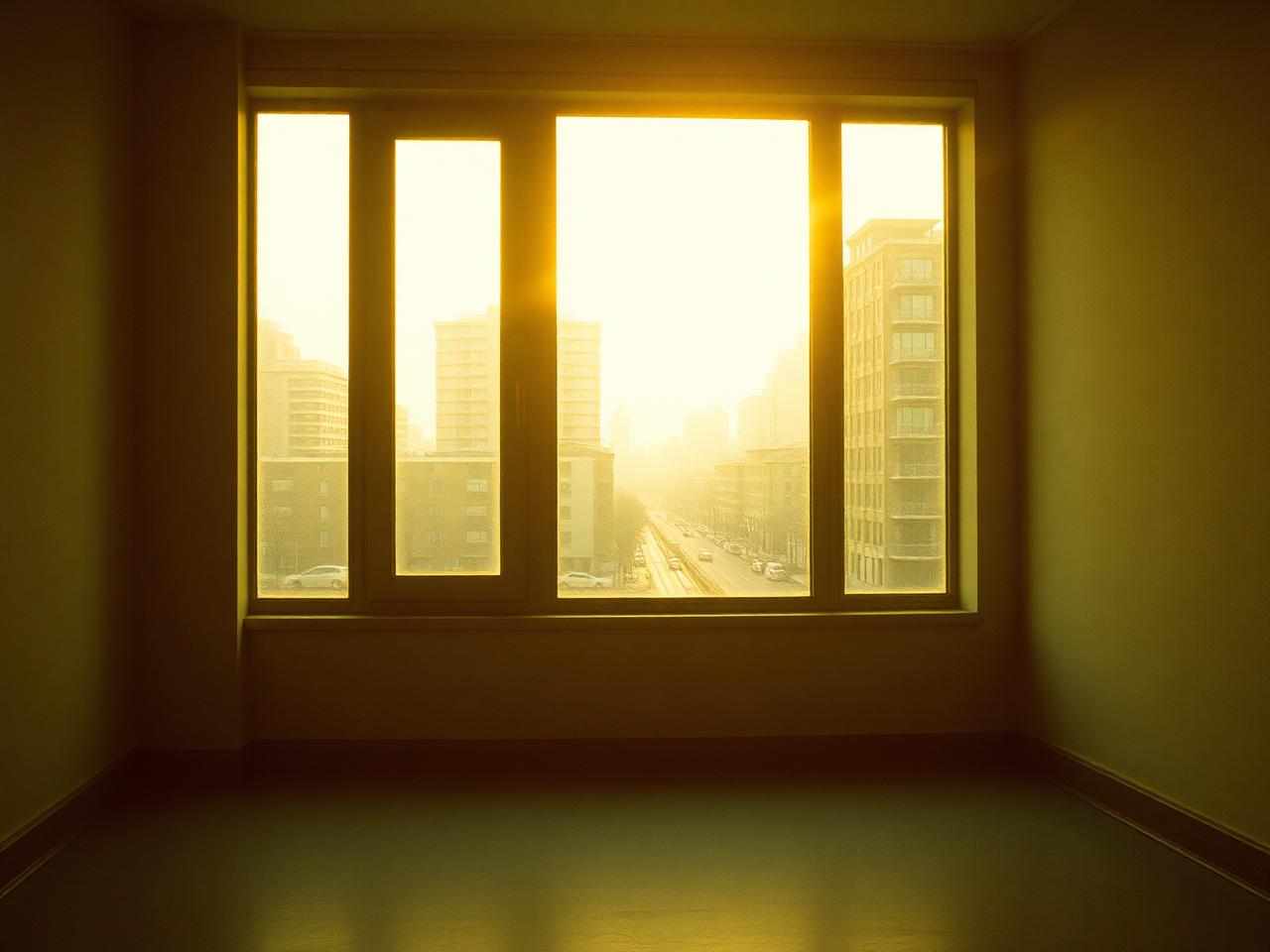
In 1986, a team led by Charles Czeisler showed that bright light could reset the human body clock, whatever hours the person slept.1 That clock is the circadian pacemaker, the timer that sets when you feel awake and when you feel sleepy. It wasn't mainly tracking bedtime, or routine, or resolve. It was tracking light.
The finding has held up: researchers took people camping for a week with no electric light. Their inner timing moved earlier, and so did their melatonin, the hormone the body puts out before sleep. Its release moved closer to sunset.2 Nothing about the people had changed. Their conditions had.
Run it backwards and the mirror image appears. Several evenings of reading on a lit screen before bed pushed melatonin later and pushed sleep later. People were less alert next morning than after a printed book.3
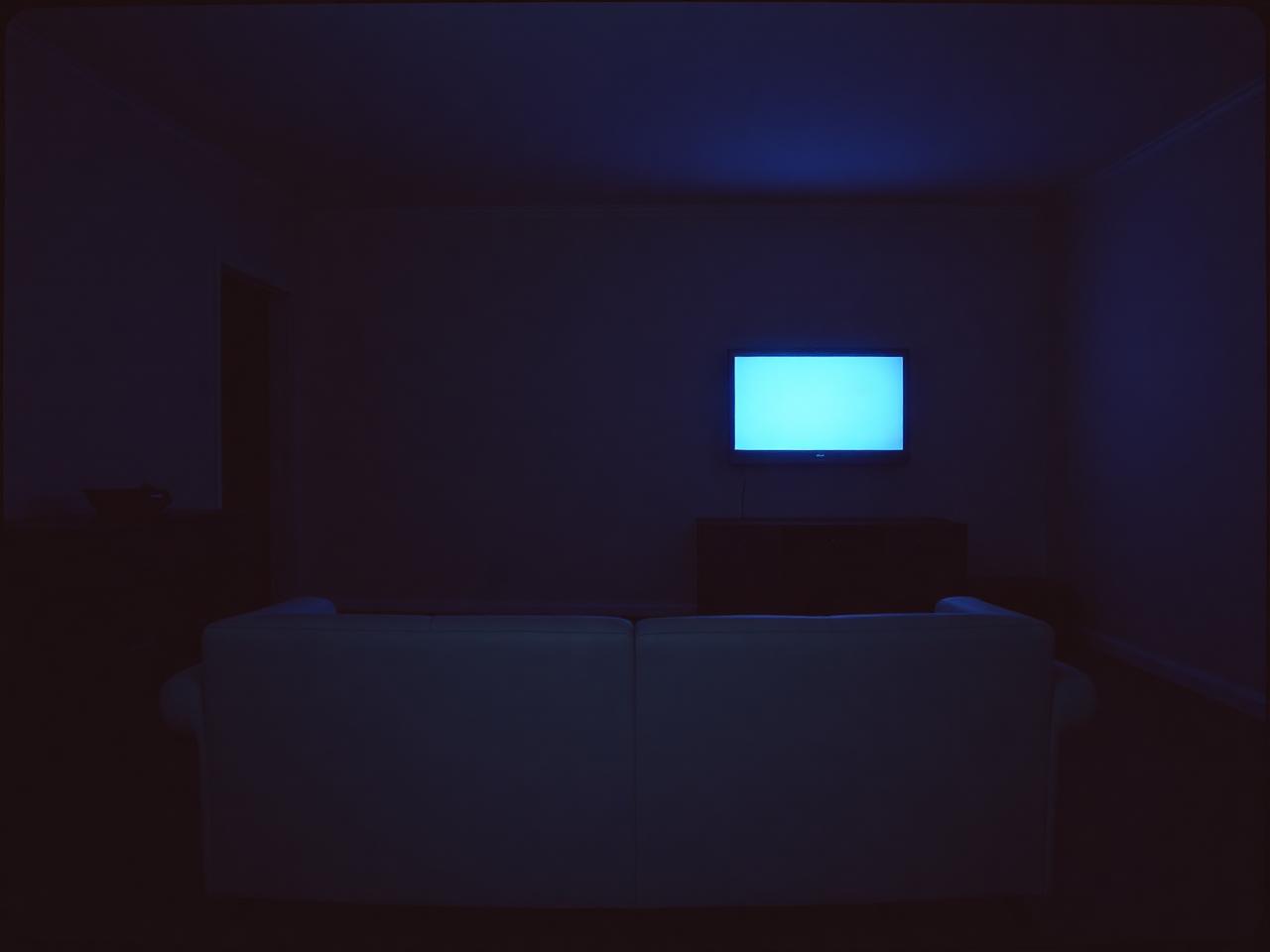
Now consider how this feels from the inside. Each evening you choose when to go to bed, and it has the full texture of a choice. But much of the answer was settled hours earlier, by the lamps and the screen in your hand. It came through a pathway you can't feel and never agreed to.
Here's the claim I want to make, and a thoughtful reader can disagree with it. The self that makes choices isn't sealed off from the room it's standing in. Light, noise, temperature, layout, distance, social norms and the way screens are designed aren't the backdrop to what we do. They're inputs to it, and they work mostly below the level where thought happens. This isn't an argument that people lack agency. It's an argument about where agency does the most good. Choosing your conditions is far more powerful than choosing your actions inside conditions you didn't design.
The body doesn't ask whether an exposure is important. It responds, and it sends the bill later.
The exposure you can hear
Light is the cleanest case, because the pathway isn't in doubt. Noise is more instructive, because of how badly it gets misfiled.
Noise is usually treated as a matter of taste. Some people mind the road, some don't, and the ones who mind should relax. Research treats it as an exposure instead, much as it treats dirty air. A major review in The Lancet set out effects far from the ear: broken sleep, weaker thinking in children, links to heart disease.4 It also treated annoyance as a health outcome in itself. A later review in a heart journal traced the paths: stress hormones, chemical damage inside cells, harm to blood vessels.5 Night-time noise was singled out as the worst, because the body answers sound without needing you awake.
"I've got used to it" is among the most confident claims in this field, and among the least sound. Not noticing a sound isn't the same as your body not answering it. The two are different processes. Someone can stop hearing the motorway past the bedroom window while their blood vessels carry on answering it, night after night, for a decade.
This is what marks off an exposure from most of what gets called lifestyle. Diet has gaps. Exercise has rest days. Work stops, at least in theory. Your conditions have no off state, and the meter runs whether or not anyone reads it.
What green space can and can't prove
The obvious answer to a bad setting is a good one, and the best studied good one is nature. Here we need more care than most coverage brings.
Stephen Kaplan proposed an idea called attention restoration. Directed attention is the effortful kind, used to hold one thing in mind while shutting others out. Kaplan argued that it wears out, and that natural places let it recover through what he called soft fascination.6 There's enough interest to occupy attention, not enough demand to consume it. Berman and colleagues found that a park of trees beat city streets on a test of directed attention.7 Bratman and colleagues found that ninety minutes in nature reduced reported brooding, compared with a walk beside traffic. Activity also fell in a brain region linked to brooding.8
Scale it up and the picture blurs. A survey of nearly twenty thousand people in England found a threshold. Those spending at least two hours a week in nature more often reported good health and high wellbeing. Below two hours, no such link appeared.9 Headlines ran the number as a dose, which it isn't. The study photographed a population at one moment, so it can't tell us which came first. People who spend two hours a week in green space differ from those who don't. Money, housing, mobility and whether there's anywhere green all predict health too. The major review of the field is candid: several paths could connect nature to health, among them cleaner air, walking and social contact. Separating those from each other, and from money and housing, is really hard.10
The immune findings need more care still. Qing Li reported that trips into forests raised the activity of natural killer cells, a type of immune cell.11 The rise lasted days. The result gets cited as though it settled something. The samples were small. Nobody was blinded, so people knew which group they were in, and that can change what they report. There was no proper control group either, which is hard to arrange, because you can't hide a forest from the person standing in it. This is real work at an early stage. Interest is the right response, not confidence.
The direction of this evidence is consistent. The size of the effect isn't settled. Both of those things are worth saying out loud.
None of this dissolves the case; it changes its shape. Natural places do seem to restore something over short spells, and the links turn up in many countries and study designs. But the causal path isn't pinned down, and anyone telling you otherwise is usually selling a retreat.
Habits live in places
If the first argument was about what places do to bodies, this one is about what they do to choices.
The folk model says people decide things and then do them, and that when the doing fails, the deciding was weak. Research on habit describes something else. Wood and Neal argued that a well practised action is set off directly by recurring features of the setting.12 That means the place, the time of day, the act just before, the people present. Call this a context-cued habit: a habit fired by the setting rather than by a fresh choice. What people say they intend predicts what they do fairly well while a habit is weak, and much less well once it's strong.
This is why the same person can be steadily disciplined in one setting and not in another. Nothing changed in their character between Tuesday and Saturday. It's also why moving house breaks habits so well: a move takes apart the cue structure that was running them. Behaviour that survived years of resolve can collapse in a fortnight, because the kitchen is a different shape.
Habits don't live in people. They live in the places where people repeat them.
Marteau and colleagues drew the public health lesson. Aim at the automatic side of behaviour, mainly by changing the places where choices are made.13 That may achieve more at population scale than appealing to conscious thought. They were explicit that the evidence for such measures was thin. That caveat hasn't been resolved; it's become a live debate. Such changes often prove weaker in the field than in the lab. When an action keeps failing, the useful question is about the setting rather than the person. What, exactly, is this set-up built to produce?
A pattern inside a larger pattern
There's an older way of describing a human being that makes all of this obvious.
A person isn't a bounded unit sitting inside a neutral box, but a pattern held inside a larger pattern. You trade light, air, sound, food and attention with everything around you, and that trade keeps reshaping you. On this reading, health belongs to a relationship, not to the body alone. A plant's condition belongs to soil, water and light. Move the plant and the same plant does differently. Nothing about it got weaker.
Ecology supplies a useful concept, with a warning. In a trophic cascade, a change in one link of a food web spreads through the whole system, reshaping parts nothing touched directly. Yellowstone after the wolves returned is the famous case, and it's been badly oversold. In the popular form, wolves changed the course of rivers, which claims far more than the evidence supports. The fifteen year review of the plant data found regrowth that was real but patchy, and uneven across sites. It was tangled up with climate, elk numbers and older land use.14 Later work has cast more doubt on its size. The concept of a cascade is sound. The size of that one is contested: serious researchers disagree about it. Use it as an example, not as proof.
Systems have load-bearing links. Change one of those and the effect can be far larger than the effort. Most self-help works downstream instead, where the effect is far too small. Restoring one link the whole set-up leans on is a different move, and that link is rarely the one attracting attention. It's often something dull and structural: what time the light goes off, or who else is in the house.
The mismatch argument, held loosely
The obvious next step is to say that modern conditions are wrong for the animal. That step is where the argument becomes easiest to overstate.
Humans took shape while moving nearly every day, under light that swung hugely between noon and midnight. Heat swung with the season, food came and went, and groups were small, steady and in the room with you. Modern life holds those dials strangely still. The light is much the same at nine in the morning and nine at night, the temperature the same in February and July. Under this reading, much of what modern life produces isn't the effect of one harmful input. It's the effect of sameness, in a system built to be tuned by change.
I find that a strong argument, but it's our reading, not a settled fact. Evolutionary mismatch reasoning is famously hard to test. The ancient setting can't be observed, and the modern one can't be taken away in an experiment. Worse, used loosely it can't be proved wrong. Any modern complaint can be paired with any modern novelty and made to sound like an answer. That pairing has produced much confident nonsense.
What splits the sound form from the unsound one is mechanism. The body clock case is strong because it doesn't rest on a story about ancestors. It rests on a traced path from light to the timing of a hormone, measured in a lab within a week.2 Where a mismatch argument comes with a traced path through the body, treat it as evidence. Where it comes only with a story about the savannah, treat it as a guess that hasn't been asked to do any work.
Where the leverage actually sits
Two objections deserve answers before this argument can stand.
The first is determinism, the idea that surroundings dictate what people do. It fails. Surroundings load the dice, and they load them unevenly. People differ hugely in how much the same setting affects them, and much of that spread is unexplained. The claim is about how influence is shared out, not that it's total.
The second objection is harder, and it's political. Much of what shapes a person's conditions isn't theirs to select. Whether the flat faces a busy road. Whether there's anywhere green within walking distance. These track income, housing markets, job terms and planning choices made decades ago by people who will never meet the tenant. The nature research is tangled up with exactly this, which isn't an accident. Hand someone the finding that a setting governs behaviour, then make fixing it their private duty, and you've traded one moralism for another. "You lack discipline" becomes "you lack a well-designed home." That's not obviously the kinder charge.
What survives both objections is narrower and more useful. Two kinds of choice are open to a person. There are choices made inside a setting: what to eat now, whether to sleep now, whether to open the app. These recur endlessly, they arrive when your capacity is lowest, and they're exactly what a room can bias. Then there are choices about the setting. Where the phone spends the night. What lights the last hour before bed. Whether the route to work passes anything living. These are rare, made once, usually while thinking clearly, and then they run by themselves for months.
Willpower is expensive. Conditions are free once they're set.
The second kind is small, dull, and holds most of the leverage. This isn't because effort is fake or discipline a myth. Effort is a recurring cost, drawn from a budget already heavily spent. Conditions, once arranged, carry on working while you sleep.
Which leaves one thing, and it has nothing to do with lamps or trees. Suppose someone's conditions have held more or less constant for years. The same rooms, the same light, the same commute, the same sound at three in the morning. Then everything they've learned about themselves has been learned at one setting of the dials. The tiredness, the appetite, the focus that fails after lunch, the person who shows up in meetings. All of it measured once, in one place, with nothing held apart to compare it with. Most of what gets called self-knowledge is knowledge of one animal in one habitat, and the habitat has never been varied. Which means the honest answer to what am I actually like may be that nobody has yet run the experiment.
The state of the evidence
What we know, what we think, and what we don't
What is well established
- Bright light shifts the timing of the human body clock. It does this whatever hours the person happens to be sleeping.
- Noise harms health in ways that have nothing to do with hearing. It breaks sleep and raises heart risk, and the person doesn't have to be bothered by the sound for this to happen.
- Strong habits are set off by features of the place they were built in. Once a habit is strong, what people say they intend predicts what they do much less well.
What evidence is emerging
- Short spells in natural places improve scores on tests of focused attention, and people report less brooding afterwards. The samples are small, and you can't hide a forest from the person standing in it, so blinding isn't possible.
- Across a whole country, time in nature goes with better health as people report it. But the headline study looked at people at a single moment. It can't separate green space from the kinds of people who live near it.
- Trips into forests have been reported to raise markers of immune activity. That work used small samples, nobody was blinded, and there was no adequate control group.
Our interpretation
- We read the light, noise and habit research as pointing at one fact about structure. Much of what feels like live decision-making follows from conditions set earlier, elsewhere, and usually by someone else.
- Our reading is that agency is real but badly spent. It goes on repeated choices about what to do, rather than on the rarer and larger choices about the setting those actions happen in.
- This is our reading, not a finding. The gap between the conditions humans took shape under and the ones they live in now is a useful way to organise thinking. It isn't a proven cause of any modern complaint.
What remains uncertain
- How much of the link between nature and health is causal is unknown. So is how much of it runs through cleaner air, more walking or more time with other people, rather than through anything restorative in nature itself.
- Nobody has shown that the gains measured over a ninety minute walk add up to lasting change across years. The studies that would settle it mostly haven't been done.
- The size of the Yellowstone trophic cascade really is contested. The popular story of wolves reshaping rivers claims far more than the ecological record supports.
- Mismatch reasoning is hard to prove wrong. There's no agreed way to decide which features of modern life are biologically important novelties and which are merely recent.
Sources
- 1.Czeisler CA, Allan JS, Strogatz SH, et al. (1986). Bright Light Resets the Human Circadian Pacemaker Independent of the Timing of the Sleep-Wake Cycle. Science 233(4764):667–671
- 2.Wright KP Jr, McHill AW, Birks BR, et al. (2013). Entrainment of the Human Circadian Clock to the Natural Light-Dark Cycle. Current Biology 23(16):1554–1558
- 3.Chang AM, Aeschbach D, Duffy JF, Czeisler CA (2015). Evening Use of Light-Emitting eReaders Negatively Affects Sleep, Circadian Timing, and Next-Morning Alertness. PNAS 112(4):1232–1237
- 4.Basner M, Babisch W, Davis A, et al. (2014). Auditory and Non-Auditory Effects of Noise on Health. The Lancet 383(9925):1325–1332
- 5.Münzel T, Schmidt FP, Steven S, et al. (2018). Environmental Noise and the Cardiovascular System. Journal of the American College of Cardiology 71(6):688–697
- 6.Kaplan S (1995). The Restorative Benefits of Nature: Toward an Integrative Framework. Journal of Environmental Psychology 15(3):169–182
- 7.Berman MG, Jonides J, Kaplan S (2008). The Cognitive Benefits of Interacting with Nature. Psychological Science 19(12):1207–1212
- 8.Bratman GN, Hamilton JP, Hahn KS, Daily GC, Gross JJ (2015). Nature Experience Reduces Rumination and Subgenual Prefrontal Cortex Activation. PNAS 112(28):8567–8572
- 9.White MP, Alcock I, Grellier J, et al. (2019). Spending at Least 120 Minutes a Week in Nature Is Associated with Good Health and Wellbeing. Scientific Reports 9:7730
- 10.Hartig T, Mitchell R, de Vries S, Frumkin H (2014). Nature and Health. Annual Review of Public Health 35:207–228
- 11.Li Q (2010). Effect of Forest Bathing Trips on Human Immune Function. Environmental Health and Preventive Medicine 15(1):9–17
- 12.Wood W, Neal DT (2007). A New Look at Habits and the Habit-Goal Interface. Psychological Review 114(4):843–863
- 13.Marteau TM, Hollands GJ, Fletcher PC (2012). Changing Human Behavior to Prevent Disease: The Importance of Targeting Automatic Processes. Science 337(6101):1492–1495
- 14.Ripple WJ, Beschta RL (2012). Trophic Cascades in Yellowstone: The First 15 Years After Wolf Reintroduction. Biological Conservation 145(1):205–213
Where a source is listed without a link, it is a book or an older paper without a stable public identifier. We link to the original work rather than to coverage of it. Read our editorial standards.
Get the Haven Journal
Weekly insights on nervous system health, the 7 dynamics, and practical tools for thriving — free.
No spam. Unsubscribe anytime.